

By Claire Lynch
As Pennsylvania’s population ages, a growing number of older adults are facing a challenge that few people see—and even fewer systems are equipped to address.
For individuals living with serious mental illness, aging often brings increasing physical health needs, functional limitations, and the need for long-term care. Yet many find themselves caught between systems. Traditional behavioral health programs may not be equipped to meet their medical needs, while nursing homes have historically struggled to support individuals with complex psychiatric conditions.
Recognizing this gap, leaders across Philadelphia’s behavioral health, aging, healthcare, and long-term care systems came together to develop an innovative solution now known as The Philadelphia Model—a pioneering approach that integrates behavioral health services into long-term care settings for older adults with serious mental illness.
“The Philadelphia Model exemplifies the kind of innovative, collaborative solution The Sarah Ralston Foundation seeks to support,” said Heather Finnegan, Executive Director of The Sarah Ralston Foundation. “It addresses a critical gap in care while bringing together multiple sectors around a shared goal: helping vulnerable older adults receive the right care, in the right setting, at the right time.”
A Growing Need
The need for new approaches is becoming increasingly urgent.
Pennsylvania has the fifth-largest population of adults age 60 and older in the United States, and by 2030, one in three Pennsylvanians will be over age 60. In Philadelphia, one in four adults is already age 55 or older. At the same time, more than 15,000 Community Behavioral Health members living with serious mental illness are between the ages of 45 and 64.
Many people living with serious mental illness—including conditions such as schizophrenia, schizoaffective disorder, bipolar disorder, and major depressive disorder—experience physical aging earlier than the general population and may require nursing home-level care at younger ages. Yet finding appropriate placements has long been difficult.
“We had a number of individuals whose physical health was deteriorating while their behavioral health needs remained significant,” explained Amanda David, Deputy Commissioner of the Philadelphia Department of Behavioral Health and Intellectual disAbility Services (DBHIDS). “Before this program existed, they often ended up in settings that could not adequately meet both their physical and behavioral health needs.”
Katie Finlay, MPH, PMP, who helped lead development of the model, described many of these individuals as becoming effectively stuck within the healthcare system.
“Some people remained in acute care hospitals for extended periods because there simply wasn’t a safe discharge option available,” she said. “They needed both behavioral health support and nursing home-level care, and there was no setting designed to provide both.”
Building a Different Model
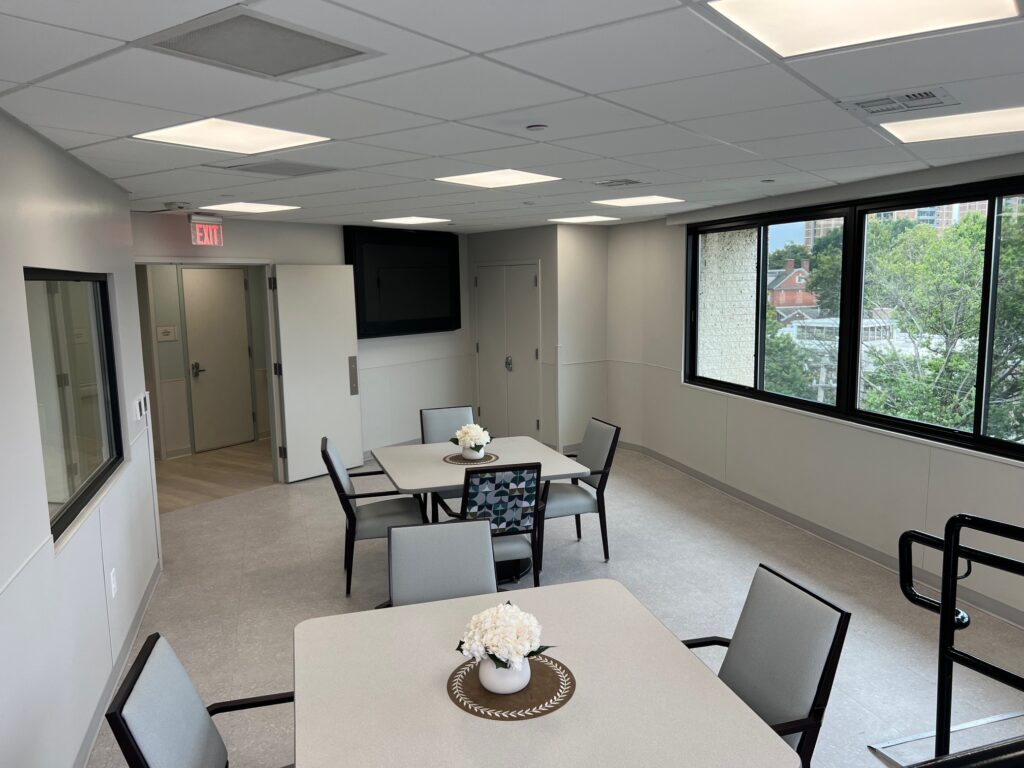
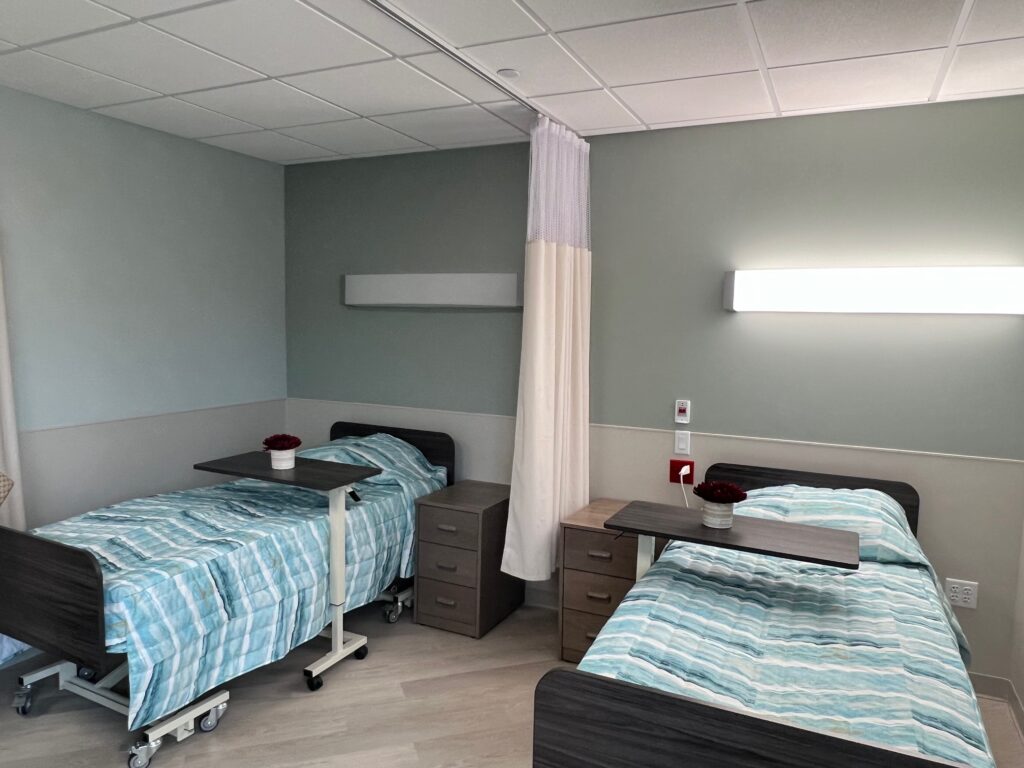
The program combines traditional nursing home services with integrated, around-the-clock behavioral health support delivered within dedicated units inside participating long-term care facilities. Residents receive nursing home care while also having access to behavioral health technicians, social workers, peer support specialists, psychiatric providers, life enrichment staff, and clinical leadership specifically trained to support individuals with serious mental illness.
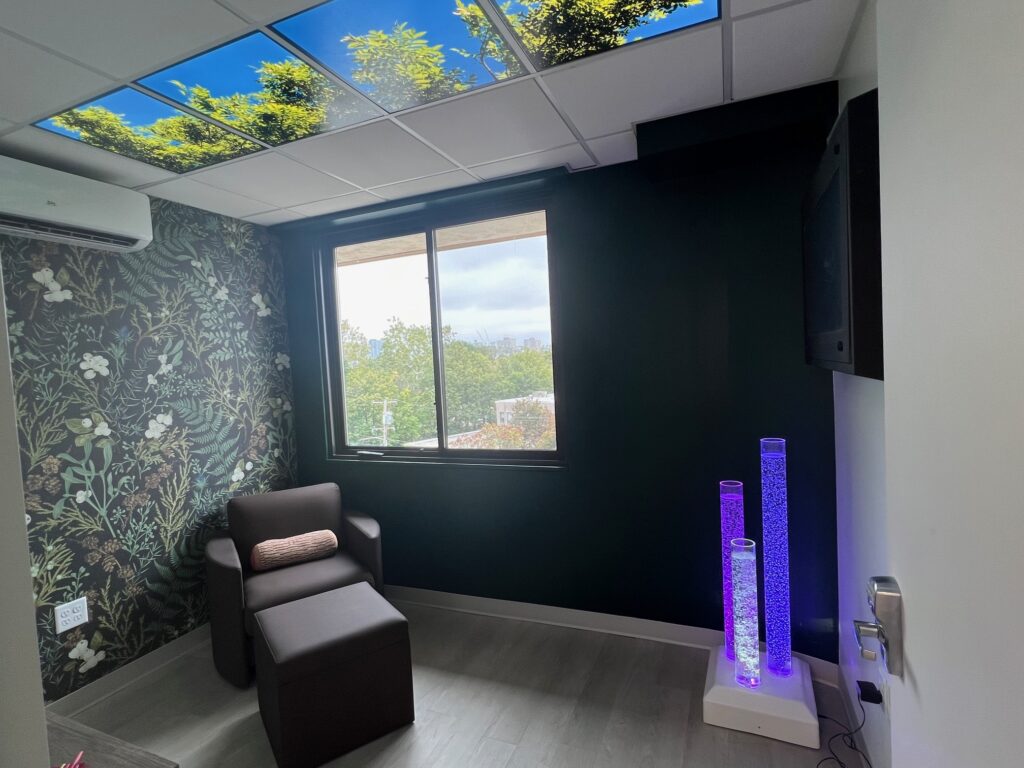
The physical environment is also intentionally designed to support residents’ well-being. Specialized sensory spaces provide opportunities for de-escalation and self-regulation, while structured programming includes group activities, one-on-one support, music therapy, art therapy, and other therapeutic interventions.
A key component of the model is its emphasis on shared training and teamwork.
“All of the nursing home staff and behavioral health staff were trained together,” Finlay said. “That helped build relationships, trust, and camaraderie across disciplines.”
Staff are trained in trauma-informed care, Mental Health First Aid, de-escalation techniques, and belonging and culture. More importantly, team members work closely together every day.
“The staff are incredibly skilled at de-escalation and meeting residents where they’re at,” Finlay said. “That makes a tremendous difference in helping people remain stable and successful.”
Transforming Lives
Since launching in November 2023, the model has expanded to two locations serving 71 residents. Participants have come from a variety of settings, including state hospitals, acute care hospitals, psychiatric facilities, residential behavioral health programs, and homeless shelters.
The results have been encouraging.
According to program data, no participant required escalation to a higher level of behavioral health care during the program’s first two years. Resident surveys have shown that quality of life remained stable or improved after six months, with positive outcomes related to psychological wellbeing, self-image, and optimism about the future.
For David, the most meaningful changes are often the ones that don’t show up in a spreadsheet.
She described residents becoming more engaged, more confident, and better able to recognize and manage situations that might otherwise lead to a crisis.
“They’ve come out of their shell,” David said. “They’re more adaptable, and they know how to manage when they’re beginning to feel overwhelmed or escalate.”
The model has also created opportunities for individuals who previously had few options.
Finlay recalled participants whose lives had been marked by cycles of homelessness, hospitalizations, and involvement with the criminal justice system. Some had spent years moving between shelters, hospitals, and institutional settings with no permanent solution in sight.
Now, many have found stability, community, and a place they can call home.
Innovation Through Partnership
One reason the model has attracted attention is that it demonstrates what can happen when organizations work across traditional boundaries.
The initiative was developed through collaboration among DBHIDS, Community Behavioral Health, state agencies, healthcare providers, nursing homes, advocacy organizations, quality experts, and federal partners.
That collaborative approach has continued as the program has evolved.
When the closure of one participating facility threatened to disrupt care for dozens of residents, partners worked together to ensure continuity.
“It took a lot of long nights, a lot of attention, and a lot of conversations,” David said. “There was constant coordination among nursing homes, state agencies, and community partners. Creating strong relationships made all the difference.”
Lessons Learned
“One of the biggest lessons we’ve learned is that nursing homes are not naturally set up for innovation,” Finlay said. “They’re complex environments operating under significant regulatory and operational pressures.”
Before implementing new models, leaders must invest time in building trust, preparing staff, and ensuring that leadership teams are ready to support change.
Creating a strong learning culture, Finlay said, has become one of the program’s most important ingredients for success.
Looking Ahead
Today, The Philadelphia Model is demonstrating that better outcomes and better stewardship of public resources can go hand in hand.
Program leaders estimate that the model generates approximately $5.1 million annually in Medicaid and state behavioral health savings while improving quality of life for participants.
And the need continues to grow. It is estimated that more than 12,600 Pennsylvanians living with serious mental illness could benefit from programs like this by 2030.
“I see this program continuing to grow,” David said. “Our population is aging, and we need more options like this. We expect to see continued expansion because the need is there.”
Finlay agrees.
“What makes this model so compelling is that it isn’t just helping people today—it’s creating a roadmap for the future,” she said. “We’re proving that when systems work together, we can provide the least restrictive, most inclusive environment possible while improving outcomes for individuals, families, and communities.”